
Your cart is currently empty!
The History of the Chevrolet Camaro Part 1
1. Introduction:
Something amazing happened in the early 60’s, on April 17, 1964 Ford introduced the Mustang at the Worlds Fair in Flushing Meadows Park, Queens, New York. Initially designed to appeal to the emerging youth market, particularly college-educated individuals and young families looking for a second car, the Mustang became a nuclear hit!
Selling 418,812 unit in 1965 alone, the Mustang quickly got the attention of the executives at General Motors.
Here’s a breakdown of the key demographics that bought the 1964 Mustang:
- Younger buyers: The median age of Mustang purchasers was 31, significantly lower than the 42 for typical Ford buyers at the time. Over 28% of Mustang buyers were under 25 years old.
- Single individuals: 35% of Mustang buyers were single, compared to just 9% of typical Ford buyers, highlighting its appeal to those seeking a sporty, personal car.
- Female buyers: A surprising 42% of Mustang buyers were female, considerably higher than the 31% of typical Ford owners. This suggests the car’s stylish design and perceived “fun” factor resonated with women.
- Two-car families and older buyers: While targeting younger buyers, Ford also recognized the growing trend of families seeking a second car and the desires of older buyers for something different. The Mustang’s affordability and versatility appealed to these segments as well, according to EBSCO.
- Individuals with higher education: The Ford team observed a strong correlation between higher education levels and car purchases, and the Mustang resonated with this demographic seeking something new and exciting.
Realizing this was an attractive demographic group to have long lasting sustainable sales, GM quickly decided they needed their own Mustang. Chevrolet’s existing sports car, the Corvette, occupied the premium segment (MSRP $4,100 vs. Mustang’s $2,368), leaving no entry-level option. Internal memos confirmed the Corvette’s price positioned it as an aspirational product, not a volume seller.
Research indicated 72% of Mustang buyers were new to Ford – a clear brand-switching opportunity. Chevrolet required a price-accessible sport coupe to: a) Capture younger buyers early in their earning cycle and b) establish brand loyalty for future upgrades (e.g., Corvette).
Style That Lasts – ‘69 Camaro Shirt for the Timeless Gearhead
2. The Camaro’s Launch: Marketing Genius (or Chaos?)
Months before the official unveiling, Chevrolet stirred the pot with a series of cheeky teaser ads calling the Camaro “the other car with bucket seats.” It was a thinly veiled jab at the Mustang, which had all but defined the new “pony car” class. With that one-liner, Chevy made it clear: they weren’t just entering the ring—they were swinging.
Dealer Confusion and Cadillac Comparisons
But not everyone was in on the joke. When the Camaro finally hit showrooms, some Chevrolet salesmen didn’t quite know what to make of it. Lacking clear direction or precedent, a few even pitched it as a “small Cadillac” to confused buyers—probably not what the marketing department had in mind.
It wasn’t entirely their fault. The name “Camaro” plucked from nowhere and rumored to mean “comrade” or “pal” (it doesn’t, really) didn’t help with clarity. Nor did the fact that the car straddled the line between sports coupe and everyday commuter.
Strong Sales, But No Mustang-Slayer… Yet
Despite the awkward rollout and naming confusion, the Camaro still managed an impressive first year: 220,906 units sold for the 1967 model. Not bad at all, until you remembered the Mustang’s jaw-dropping 418,812 debut in 1965.
It was proof that Chevy’s entry didn’t instantly dethrone the king. The Camaro had the looks, the attitude, and a growing list of performance options (including the legendary Z/28), but it would take time, and a lot of horsepower, to truly carve out its legacy.
3. Engineering the Beast: How Chevy Made It Fast
Let’s get the embarrassment out of the way: the base-model Camaro came with a 140-horsepower 3.8L inline-six. It was slow. Like, really slow. But with a starting price of just $2,466, it got people in the door. Still, this wasn’t the Camaro that legends were built on, it was more of a stylish grocery-getter than a quarter-mile bruiser.
SS 350: The “Real” Starter Camaro
Enter the Super Sport (SS) 350. This was Chevy’s first serious attempt at giving the Camaro some muscle. With a 295-horsepower 350ci small-block V8, the SS could run the quarter-mile in 13.9 seconds on paper. In reality, Car Life magazine tested it at 14.3 seconds — still respectable, but not exactly setting drag strips on fire.
Still, the SS gave buyers something to brag about, and it laid the groundwork for what came next.
Z/28: Chevy’s Secret Trans-Am Cheat Code
The real weapon was the Z/28. Built specifically to qualify for the SCCA Trans-Am racing series, which had a strict 305ci engine limit, Chevy engineered the Z/28 with a high-revving 302ci V8. Officially rated at 290hp, this engine was one of the most underrated mills in GM history. Real-world output? Somewhere between 350 and 370 horsepower.
It was never meant to be a mass-market car. In fact, Chevy barely advertised it. But for those in the know, the Z/28 was a street-legal race car with the soul of a track monster.
COPO 427: The Dealer-Only Street Killers
Then came the truly wild ones—the COPO Camaros. Through Chevrolet’s Central Office Production Order (COPO) system, savvy dealers like Yenko and Baldwin-Motion ordered Camaros with 427ci big-block V8s meant for full-size cars and Corvettes.
The result? 425 horsepower from the factory (wink-wink), sub-13-second quarter-mile times, and only 1,015 ever made. These weren’t advertised, weren’t on the brochure, and weren’t for the faint of heart. These were factory hot rods hiding in plain sight.
Transmission Choices: One Hero, One Boat Anchor
Unfortunately, not every Camaro was equipped to handle all that muscle. Chevy offered the dreaded 2-speed Powerglide automatic—fine for grandmas, useless for drag racing. On the flip side, the Muncie 4-speed manual was the gearbox of choice for anyone who wanted to row their way to glory.
The Powerglide might’ve been smooth, but the Muncie made the Camaro fast.
4. First-Gen Flaws: What Broke (and Why Enthusiasts Didn’t Care)
The first-generation Chevrolet Camaro (1967-1969) stands as one of the most iconic muscle cars ever produced, with its aggressive styling and potent powerplants capturing the hearts of enthusiasts for generations. However, beneath that stunning exterior lurked a collection of flaws that would frustrate owners and tarnish the model’s reputation in ways that still echo today.
The Rust Epidemic
Perhaps no issue plagued first-generation Camaros more persistently than premature rust. The wheel wells and rocker panels became notorious weak points, succumbing to corrosion with alarming speed. This wasn’t just a cosmetic issue—structural integrity suffered as these critical areas deteriorated. GM’s quality control during this era was questionable at best, and the Camaro bore the brunt of cost-cutting measures that prioritized production speed over long-term durability. Many otherwise pristine examples from this generation now command significantly lower values due to extensive rust damage, making restoration a costly endeavor that often exceeds the car’s worth.
Electrical Nightmares
The electrical systems in first-gen Camaros were emblematic of typical 1960s GM engineering shortcuts. Fuse boxes frequently melted under normal operating conditions, leaving drivers stranded with dead electrical systems. Dashboard gauges failed with frustrating regularity, robbing drivers of critical information about engine temperature, oil pressure, and fuel levels. These weren’t isolated incidents but systemic problems that affected thousands of vehicles. The electrical gremlins weren’t just inconvenient—they were potentially dangerous, as failed warning systems could lead to catastrophic engine damage.
Suspension Shortcomings
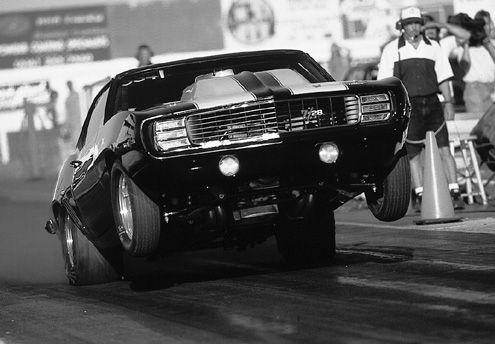
While the Camaro looked fast standing still, its suspension setup revealed GM’s penny-pinching approach to performance. The rear end featured a primitive leaf spring and live axle combination that created notorious wheel hop under acceleration. This setup was particularly problematic for high-performance variants, where the substantial torque would cause the rear wheels to lose traction and bounce violently. The only real solutions were aftermarket traction bars or, as many frustrated owners discovered, prayer. This fundamental flaw undermined the car’s performance credentials and made it less competitive against rivals like the Ford Mustang, which offered more sophisticated suspension options.
Market Reality Check
Despite the mythology surrounding these cars today, first-gen Camaros faced significant sales challenges. The model peaked in 1969 with 243,085 units sold, but this represented the end of an era rather than sustained success. The subsequent drop in sales wasn’t entirely GM’s fault—insurance companies had begun cracking down on muscle cars, making them prohibitively expensive for many buyers. However, the timing was particularly unfortunate for the Camaro, as quality issues were becoming more apparent just as the market was contracting.
Legacy of Compromise
The first-generation Camaro represents a fascinating study in automotive compromise. GM created a visually stunning car with genuine performance potential, but undermined it with cost-cutting measures that prioritized short-term profits over long-term reliability. The rust issues, electrical problems, and suspension limitations weren’t minor inconveniences—they were fundamental flaws that affected the ownership experience.
Today’s collector market reflects these historical realities. While pristine, well-maintained examples command premium prices, the majority of surviving first-gen Camaros require extensive restoration work. The cars that defined an era of American automotive enthusiasm also serve as cautionary tales about the dangers of rushing products to market without adequate quality control.
The first-generation Camaro’s flaws don’t diminish its cultural significance or visual appeal, but they provide important context for understanding why these icons of American muscle required significant evolution in subsequent generations. Sometimes the most beautiful cars carry the deepest scars.
Bold & Iconic: 5th Gen Camaro Men’s Graphic T-Shirt
5. Conclusion: The Camaro’s First Blood
Today, that first-generation Camaro is an icon. But back in 1966, it was a gamble, launched into a market Ford had already set on fire. The Camaro didn’t win the first round, however, it threw a punch that started one of the greatest rivalries in automotive history.
The first Camaro wasn’t born a legend; it had to be optioned into one. From sluggish six-cylinder commuters to tire-frying COPO monsters, Chevy built a platform that could be as tame or terrifying as you wanted. This modular approach to performance would become GM’s calling card, allowing buyers to customize their muscle car experience like never before. While Ford offered variants of the Mustang, none matched the Camaro’s range from economy car to street racer.
And while it didn’t win the horsepower war outright in 1967, it fired the first shots in what would become a decades-long arms race, one quarter-mile at a time. The Camaro’s introduction forced every manufacturer to reconsider their performance offerings, escalating the muscle car era to heights nobody had imagined when the Mustang first galloped onto dealer lots.
The legacy of that first generation is complex but undeniable: it proved Chevrolet could brawl with Ford, but not without scars. The rust, electrical gremlins, and suspension compromises were real problems that affected real owners. Yet these flaws couldn’t overshadow the fundamental achievement—GM had created a credible Mustang fighter that would evolve into something far greater than its initial iteration.
But the story was far from over. In our next installment, we’ll explore how the 1970s oil crisis nearly neutered the Camaro line, witness the Z28’s remarkable comeback, and discover why the 1980s almost killed America’s favorite pony car altogether. The first generation may have been imperfect, but it laid the foundation for a legend that would survive disco, malaise, and even its own near-death experience.

Leave a Reply